Give the work context
Define Area, Line or location, and Equipment or item so records belong somewhere meaningful. The structure can evolve later.
Turnover connects active industrial work, structured forms, follow-up, closure, and searchable history so the next person can recover what happened, what was approved, and what the team learned.
A Program starts with enough facility structure to give work useful context. From there, value grows through the work people are already doing, the forms they complete, and the knowledge they choose to preserve.
Capture the condition and real observations, while they're fresh.
Link relevant responses, ownership and follow-up when supported.
Find the prior history when a similar problem returns.
Illustrative flow, not a recording of the Turnover interface. The complete workflow depends on the records and permissions configured in your Program.
Define Area, Line or location, and Equipment or item so records belong somewhere meaningful. The structure can evolve later.
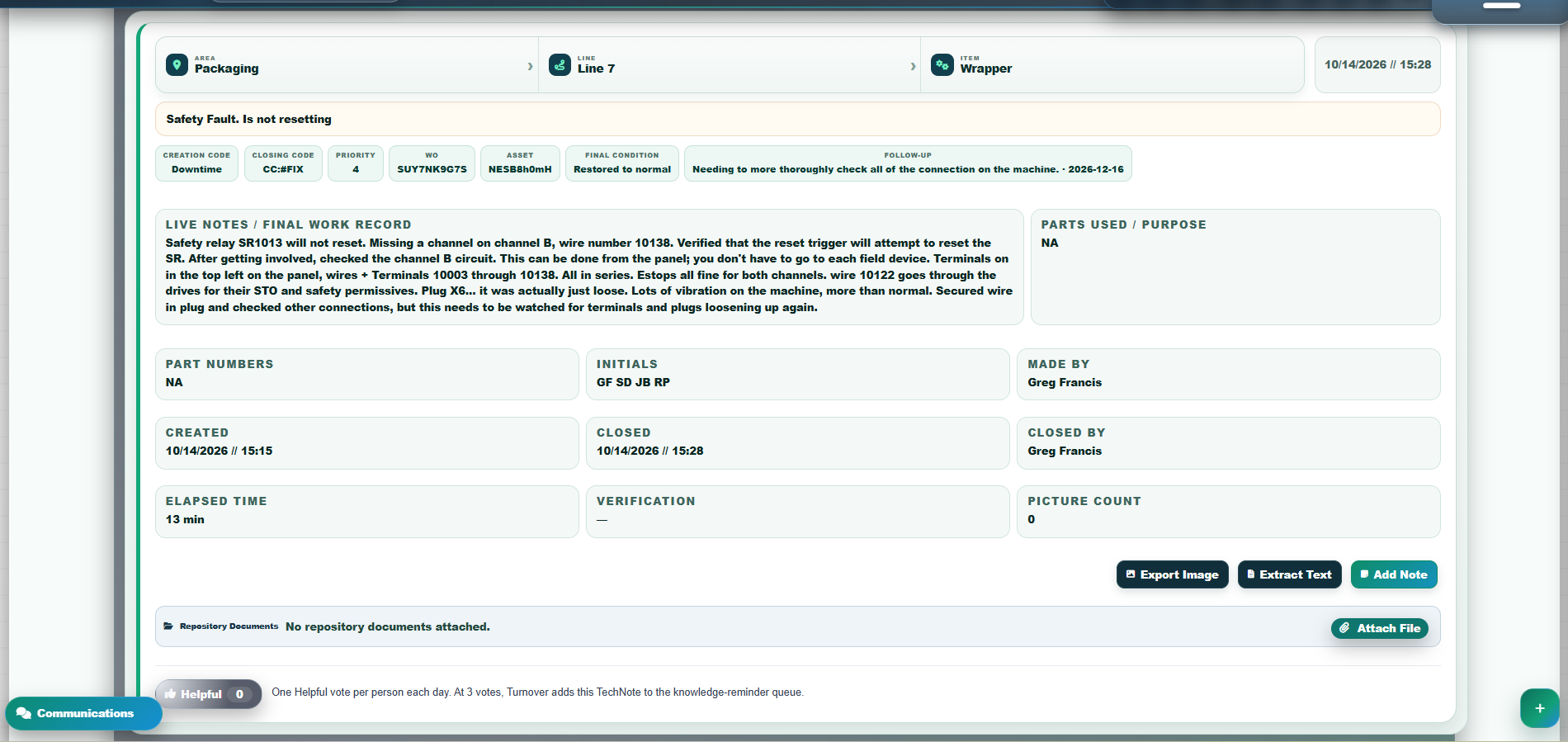
Create LiveNotes or Operations records with owners, comments, pictures, findings, codes, and the real details people need during the issue.
Carry work into Actions, Schedule, Projects, or source references when the issue cannot be finished in the moment.
Record what was found, changed, verified, completed, or transferred instead of falsely making unfinished work disappear.
Recover prior problems, comments, responses, pictures, codes, dates, locations, assets, and other retained context.
Let the prior answer help the original contributor, another shift, another department, or a future troubleshooting event.
Controlled forms, optional Intelligence, recurring oversight and export are additional capabilities. Start with one useful workflow; adopt these when they genuinely help.
Run company Work Forms or Safety Forms through draft, review, approval, and completed history without treating a generic template as company policy.
Leroy can reason across authorized Turnover evidence and TurnBase knowledge, while the underlying records remain the authority.
Use Intelligence Auto Jobs and automatic notifications to watch supported Program conditions, prepare recurring analysis, and surface configured triggers without rebuilding the same review manually.
Use Core TurnBase export for authorized customer-owned knowledge, or Intelligence Context Packets when richer connected context is needed for approved larger-model analysis.
See a documented example where further work was scheduled and resumed, without pretending the first visit had solved everything.
Choose a situation and follow what gets recorded, resolved, and reused. These diagrams illustrate the workflow.
Operator records the intermittent fault and the equipment context; the initial response is not treated as a confirmed root cause.
The next shift or technician can see the actual record of what was tried, what remains unknown, and what needs follow-up.
The product does not require every customer to begin from the same software environment.
Create the program and the initial operating context.
Start with Area, Line/location, and Equipment/item. You can change it later.
Assign the people and permissions needed for the first real workflow.
Create a LiveNote, follow the work, close it, then retrieve the knowledge.
Use a recurring issue, difficult handoff, follow-up gap, contractor closeout, or knowledge-retrieval problem that your team already cares about.
Turnover connects the work people are already doing with the history, context, and experience they will need later. Start with the problem that costs your team the most time or knowledge today.
Focused workflows are still available when they fit your need: shift handover · preventive maintenance · MRO spare parts.